1.8 Caregiving - Activities of Daily Living
When we look at the demographic changes occurring in California, it's easy to focus on the numbers: more older adults, longer life expectancy, and growing demand for healthcare and community services. But what interests me just as much is how these changes will influence the ordinary activities of everyday life. What happens when someone wants to continue doing the things they've always done, but their physical abilities, health, environment, or circumstances begin to make those activities more difficult?
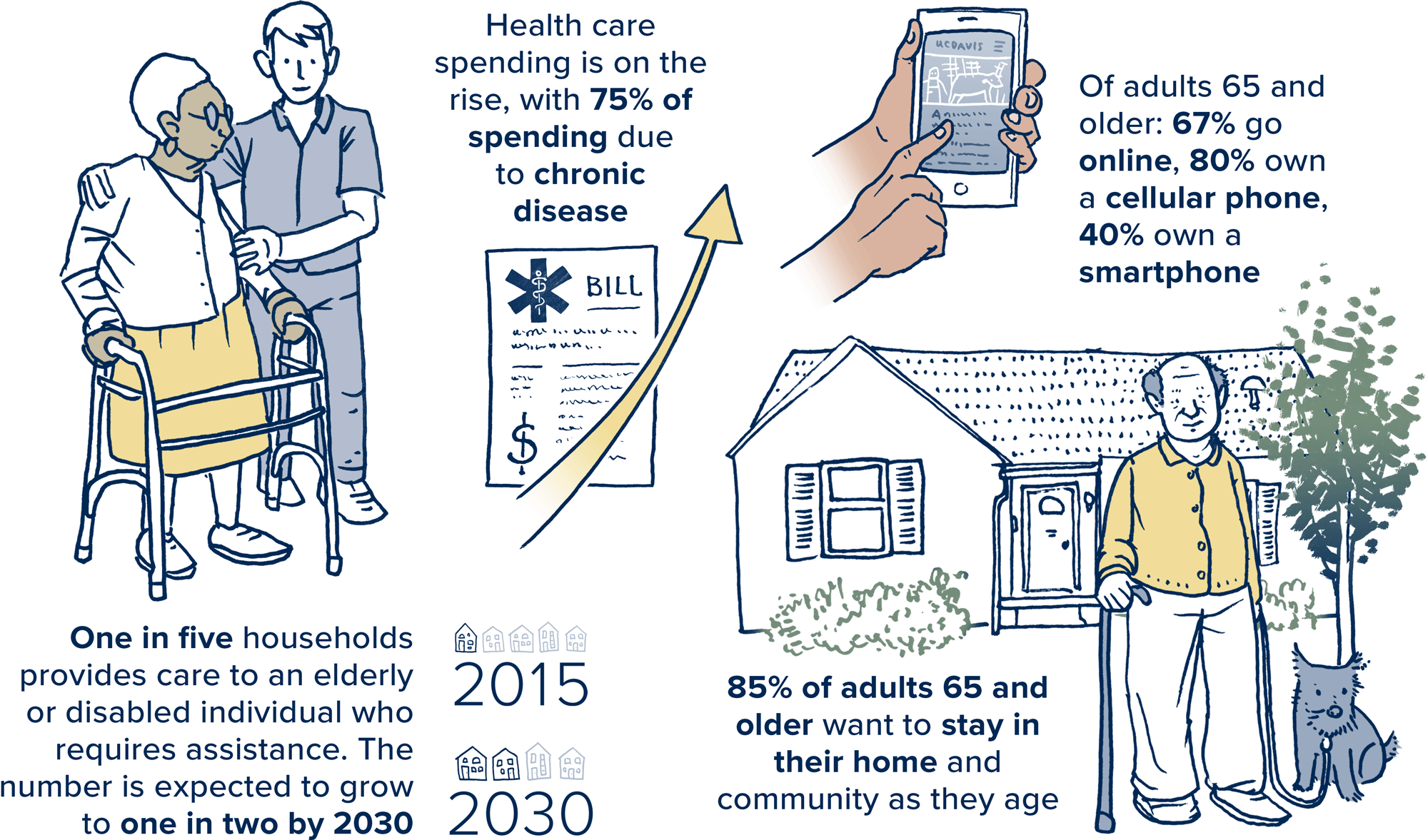 Think about the design of our homes and communities. We build beautiful two-story houses with bedrooms upstairs, bathtubs that require stepping over a high ledge, kitchens with cabinets that are difficult to reach, and neighborhoods where having a car is almost essential. None of these features necessarily creates a problem when we're young and physically capable, but what happens when someone develops arthritis, experiences changes in vision, or begins having difficulty with balance?
I think about older residents of San Francisco who live on steep hills, sometimes with fifteen or twenty stairs just to reach their front doors. I think about carrying groceries, getting the trash cans to the curb, maintaining a garden, or doing laundry when the washer and dryer are downstairs. These aren't necessarily activities we associate with healthcare, but they can have an enormous influence on whether someone can continue living independently.
And then there are technologies and services that may actually make independent living easier. How many of us became accustomed to grocery delivery, online shopping, or meal delivery services during the pandemic? Instacart and DoorDash aren't just conveniences. For someone who no longer drives, has limited mobility, or finds shopping exhausting, these services may make the difference between managing independently and needing someone else to provide assistance.
One thing I want to emphasize is that we shouldn't confuse growing older with becoming dependent. Most older Americans live in community settings rather than nursing homes, and many maintain substantial independence throughout their later years. Even among people who experience significant functional limitations, the amount and type of assistance needed can vary tremendously.
We also need to remember that many older adults strongly prefer remaining in their own homes and communities, a concept we call aging in place. But aging in place doesn't necessarily mean managing every activity without assistance. Sometimes it involves modifying the home, using adaptive equipment, obtaining transportation, or arranging help with particular tasks. At other times, more extensive personal care or professional services may be necessary.
And that's where our study of caregiving becomes particularly practical. How do we determine what assistance someone actually needs? How do we distinguish between activities that are difficult, activities that require some assistance, and activities someone can no longer perform safely? Most importantly, how do we provide assistance without unnecessarily taking away independence?
One of the most widely used starting points is the assessment of Activities of Daily Living, commonly known as ADLs.
Activities of Daily Living: What Does It Take to Get Through the Day?
Think about everything you've done since waking up this morning. You probably got out of bed, used the bathroom, brushed your teeth, showered, dressed, prepared something to eat, and moved around your home. Depending on your schedule, you may also have driven to work, used public transportation, gone shopping, managed your finances, or taken medications.
Most of us complete these tasks with relatively little thought. But if you've ever recovered from surgery, broken a bone, experienced significant pain, or lived with a temporary disability, you may have discovered how complicated ordinary activities become when something interferes with your ability to perform them.
Imagine trying to wash your hair with one arm immobilized, stepping into a bathtub after hip surgery, or preparing dinner while using a walker. Suddenly, activities that once seemed automatic require additional time, equipment, planning, or another person's assistance.
In gerontology and healthcare, we use functional assessments to understand how effectively individuals perform the activities necessary for everyday living. Three categories are particularly useful in caregiving:
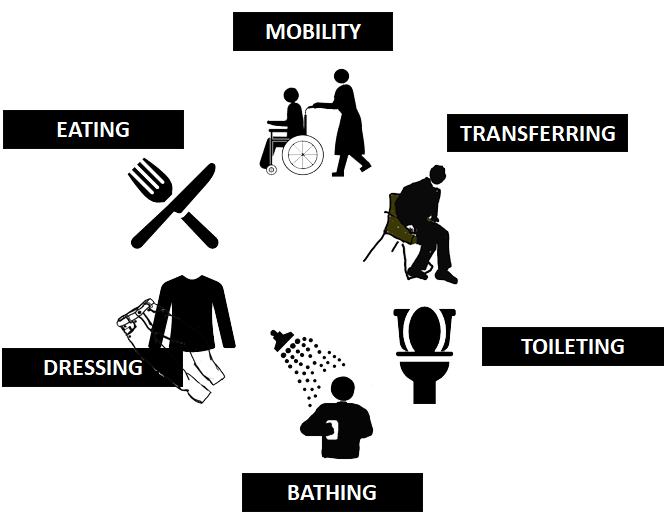
Activities of Daily Living (ADLs) are the basic personal activities involved in caring for oneself, including bathing, dressing, eating, toileting, transferring, and maintaining continence.
Instrumental Activities of Daily Living (IADLs) involve more complex responsibilities necessary for managing daily life in the community. These include shopping, preparing meals, managing medications, maintaining a household, handling finances, and using transportation or communication systems.
Medical and Nursing Tasks (M/N tasks) involve activities associated with managing illness, treatment, or particular healthcare needs. Examples may include wound care, injections, managing medical equipment, or monitoring certain health conditions.
These categories help us understand different kinds of assistance, but they aren't rigid descriptions of what someone can or cannot do. A person may need help with one IADL while remaining independent in every other activity. Another may require hands-on assistance with bathing but manage household finances and medical decisions without difficulty.
And someone who needs assistance today may become more independent following treatment, rehabilitation, or changes to their environment.
Let's Hear It Explained
The following video from The Caregivers Toolbox introduces Activities of Daily Living and their importance in caregiving. As you watch, consider why an assessment of
functional abilities may be more useful than simply knowing someone's age or medical diagnosis.
Opens the original video in a new tab.
The Six Activities of Daily Living
The traditional Katz Index of Independence in Activities of Daily Living identifies six basic activities commonly used to evaluate personal functioning. These activities are fundamental to everyday self-care, but it's important to understand what each includes and how difficulties may affect caregiving decisions.
Bathing
Bathing involves washing the body and maintaining personal cleanliness. Someone may have difficulty standing in a shower, getting into a bathtub, reaching parts of their body, or maintaining balance while washing. However, needing assistance with bathing doesn't necessarily mean the person is incapable of performing the entire activity.
For example, someone with limited shoulder movement may be able to wash independently but need help reaching their back. Another individual may benefit from a shower chair, handheld showerhead, grab bars, or a walk-in shower. A caregiver who understands the specific difficulty can provide targeted assistance rather than automatically taking over the entire task.
Dressing
Dressing includes selecting, putting on, and removing clothing, as well as managing fasteners, shoes, and other items. Arthritis, weakness, changes in coordination, pain, or cognitive impairment may create challenges.
Imagine someone who can dress independently but struggles with tiny buttons because of arthritis. Would it make more sense to have a caregiver dress the person every morning, or might clothing with easier fasteners allow them to continue dressing themselves?
Both approaches may be appropriate under different circumstances, but the second preserves an ability that the individual still possesses. The distinction is important because doing something for someone isn't always the same as helping them.
Eating or Feeding
In an ADL assessment, eating generally refers to the physical ability to bring food to the mouth and consume it once the meal has been prepared and made available. It does not necessarily include grocery shopping, cooking, or planning meals, which are generally considered IADLs.
Someone with tremors, limited hand strength, or impaired coordination may have difficulty using ordinary utensils but benefit from adaptive equipment or assistance positioning food. Another individual may require more direct help because of physical or cognitive limitations.
We also need to distinguish difficulty feeding oneself from medical problems involving chewing, swallowing, or nutrition. Those concerns may require evaluation by appropriate healthcare professionals rather than simply changing the amount of assistance offered during meals.
Transferring
Transferring refers to moving between positions or surfaces, such as getting out of bed, standing from a chair, or moving between a wheelchair and another surface.
This is one of the activities that deserves particular attention because assisting someone incorrectly can cause injury to both the individual receiving care and the caregiver. A person may need nothing more than a stable chair with appropriate armrests, while another may require a transfer device, specialized equipment, or assistance from someone trained in safe techniques.
We'll examine transfers in more detail when we study practical caregiving skills. For now, remember that caregivers should never assume that physically lifting someone is automatically safe or appropriate simply because assistance is needed.
Toileting
Toileting involves getting to and using the toilet, managing clothing, and performing the necessary personal hygiene. Difficulties may arise because of mobility limitations, balance problems, cognitive impairment, bathroom design, or other health conditions.
Consider how something as simple as the height of a toilet can affect independence. Someone with painful knees may have difficulty sitting down or standing up from a low toilet but function much more comfortably with an appropriate raised seat or grab bars.
In that situation, changing the environment may reduce the need for hands-on assistance.
Continence
Continence refers to the ability to control bladder and bowel functions. Changes in continence can create practical, emotional, and social challenges, particularly when individuals feel embarrassed discussing intimate personal needs.
However, continence difficulties should not automatically be treated as an inevitable consequence of aging. They may be associated with medical conditions, medications, mobility problems, or other factors that deserve appropriate evaluation.
Someone experiencing urinary incontinence may still be entirely capable of bathing, dressing, managing medications, and making their own decisions. Identifying a limitation in one activity tells us very little about the person's abilities in other areas.
Instrumental Activities of Daily Living: Managing Life Beyond Personal Care
Now let's move beyond getting dressed, bathing, and eating. What does someone need to be able to do to manage an independent household and participate in their community?
That's where Instrumental Activities of Daily Living (IADLs) become important.

IADLs generally require more complex combinations of physical ability, memory, judgment, planning, organization, and access to resources. They include activities such as preparing meals, shopping, managing medications, paying bills, arranging transportation, using communication technologies, maintaining a household, and performing other responsibilities necessary for independent community living.
One of the important differences between ADLs and IADLs is that someone may manage all basic personal activities independently while experiencing significant difficulty with instrumental activities.
For example, an 82-year-old man may bathe, dress, eat, and move around his home without assistance. However, he no longer drives and has begun having difficulty organizing prescriptions after several medication changes. He may need transportation and help establishing a medication-management routine, but he doesn't necessarily need assistance with bathing or dressing.
Another individual may manage medications and finances perfectly well but struggle with grocery shopping because of limited mobility. A delivery service, transportation program, or occasional assistance from a neighbor might address the problem without requiring a more intensive caregiving arrangement.
Not Every IADL Difficulty Requires a Caregiver
This is where I want you to begin thinking creatively.
If someone has trouble shopping, the answer doesn't necessarily have to be sending a caregiver to the store every week. Online shopping, grocery delivery, transportation services, or assistance from a community organization may provide alternatives.
If housekeeping becomes physically demanding, perhaps occasional professional cleaning or rearranging frequently used household items would be sufficient. If preparing meals becomes difficult, meal-delivery programs, adaptive kitchen equipment, or assistance with food preparation may help.
Even managing medications can involve different levels of support. One person may benefit from a weekly pill organizer, another from reminder technology, and another from direct assistance provided by an appropriately trained or authorized caregiver. The safest arrangement depends on the person's abilities, the medication regimen, and the circumstances involved.
Notice that we're beginning to move away from the assumption that difficulty completing a task automatically means someone needs another person to take over.
Sometimes the solution is assistance. Sometimes it's technology. Sometimes it's changing the environment. And sometimes it's recognizing that a different approach allows the person to continue doing something independently.
ADLs vs. IADLs: Why the Distinction Matters
Let's reinforce the difference between these categories before moving on.
ADLs describe fundamental personal-care functions. IADLs describe the more complex activities involved in managing daily life and remaining independent in the community. Both matter, but difficulties in one category don't necessarily predict difficulties in the other.
The following short video, Caregiver Minute: ADLs vs. IADLs, reinforces this distinction.
Opens the original video in a new tab.
As you watch, consider an older adult who can perform all six ADLs independently but requires assistance with transportation, shopping, and household maintenance. What would be gained, or potentially lost, by assuming that this individual needs a more intensive care setting simply because assistance is required?
Functional Assessment: What Can the Person Actually Do?
Once we understand the categories of ADLs and IADLs, the next step is determining how well an individual can perform particular activities. This process is known as functional assessment.
A functional assessment considers more than whether someone can or cannot complete a task. It may examine whether the activity can be performed safely, whether assistance or equipment is needed, whether the individual requires reminders or supervision, and whether the difficulty occurs consistently or only under certain circumstances.
For example, someone with arthritis may dress independently on most mornings but require assistance during periods of significant pain. Another individual may physically be able to prepare meals but have cognitive changes that make using a stove unsafe without supervision.
We also need to distinguish between an activity someone cannot perform and one they do not perform. An older adult who has never managed household finances may not be familiar with online banking, but that doesn't necessarily indicate cognitive impairment. Similarly, someone who has always relied on a spouse to cook may need instruction rather than permanent assistance.
This is why standardized assessment tools are valuable, but they should be interpreted within the individual's circumstances. The Katz Index evaluates basic ADLs, while the Lawton and Brody framework is widely used to assess instrumental activities. Occupational therapists, nurses, physicians, social workers, and other appropriately qualified professionals may contribute to functional assessments, depending on the setting and purpose.
A good assessment also considers the person's living environment, available support, preferences, and goals. An individual who cannot climb stairs may function very well in a single-story home, while someone with relatively minor mobility limitations may struggle in a house with steep exterior steps and inaccessible bathrooms.
Functional ability is not simply a characteristic of the person. It is also influenced by the environment in which the activity occurs.
What About Medical and Nursing Tasks?
In addition to ADLs and IADLs, many family caregivers perform responsibilities associated with medical treatment or managing chronic illness.
These may include assisting with medication administration, monitoring symptoms, providing wound care, managing medical equipment, supporting prescribed treatments, or recognizing when someone's condition requires professional attention.
According to Caregiving in the U.S. 2025, approximately 55% of family caregivers perform medical or nursing tasks, yet only 22% report receiving training for those responsibilities.
That's an important finding because caregiving responsibilities have become increasingly complicated as more people receive care at home following hospitalization or while managing chronic medical conditions.
Consider someone discharged from the hospital with a complicated wound-care routine or unfamiliar medical equipment. A family member may be willing to help, but willingness doesn't provide the training necessary to perform every procedure safely.
Some activities can be taught to caregivers through appropriate professional instruction. Others may require licensed healthcare providers or specialized personnel, depending on the task, setting, and state regulations.
And there's another distinction: recognizing that someone needs assistance doesn't automatically mean a family caregiver should provide it personally.
An appropriate caregiving plan may involve professional services, instruction, equipment, or additional support. Caregivers need to understand their limitations and recognize when circumstances exceed their abilities or authority.
Supporting IADLs Without Unnecessarily Taking Over
Let's imagine an older woman named Helen, who lives alone in the home she's owned for forty years. She manages her personal care independently, enjoys cooking, and handles her own finances. However, arthritis has made grocery shopping difficult, and she has begun limiting her trips outside the home because she worries about falling.
Her adult son suggests that she move into an assisted living community because he's concerned about her safety. Helen, meanwhile, wants to remain in her home and believes she can continue managing independently with a little additional help.
Before deciding that either person is right or wrong, what do we need to know?
We might begin by examining the specific activities Helen finds difficult. Is transportation the primary problem? Does she have trouble walking through large stores, carrying groceries, or getting items into the house? Has she actually fallen, or is she limiting activity because of fear? Could a mobility assessment, grocery delivery, transportation service, or other intervention make a difference?
We should also ask what Helen values about remaining at home. Perhaps her neighborhood, garden, familiar routines, and community relationships are particularly important to her quality of life.
The purpose of assessment isn't simply to identify deficits. It's to understand the relationship between the person's abilities, environment, support network, and preferences so that we can develop an appropriate plan.
The Difference Between Assistance and Dependence
Here's something I particularly want you to remember: receiving assistance and losing independence are not the same thing.
Someone who uses a wheelchair may be highly independent. Someone who relies on grocery delivery may exercise considerable control over their daily life. An individual who receives assistance bathing may still manage their finances, participate in medical decisions, and determine where and how they want to live.
We sometimes confuse independence with doing everything ourselves. But independence also includes having choices, directing our own activities, and determining when and how assistance is provided.
For caregivers, this requires resisting the temptation to take over simply because we can perform an activity more quickly or efficiently. If someone needs additional time to dress, prepare a meal, or complete another activity, allowing that time may preserve skills, confidence, and personal control.
Of course, there are circumstances when providing assistance is necessary for safety or well-being. The challenge is to identify those circumstances thoughtfully rather than assuming that age, disability, or a medical diagnosis automatically determines what someone can do.
ADLs, IADLs, and Eligibility for Services
Functional assessments also have another important purpose. They help healthcare providers, insurance companies, and public programs determine the amount and type of assistance an individual may require.
For example, long-term care insurance policies frequently use limitations in ADLs as part of their criteria for paying benefits. Under federal rules governing tax-qualified long-term care insurance, eligibility may involve needing substantial assistance with at least two ADLs for an expected period of at least 90 days, or requiring substantial supervision because of severe cognitive impairment. Specific benefits depend on the policy and applicable conditions.
California's In-Home Supportive Services (IHSS) program takes a different approach. Eligible individuals undergo an assessment of their functional needs and the assistance required to remain safely at home. The county evaluates the person's circumstances and authorizes services according to program requirements.
Medicare has yet another set of rules. Although Medicare may cover qualifying home health services, including intermittent skilled nursing, certain therapies, and limited home health aide assistance under specified conditions, it generally does not cover ongoing custodial or personal care when that is the only type of assistance required.
Notice how complicated this becomes. Two individuals may have similar difficulties performing everyday activities but qualify for different services because of differences in medical needs, insurance coverage, finances, or program eligibility.
We'll examine Medicare, Medi-Cal, IHSS, long-term care insurance, and community support programs in much greater detail later in the course. For now, I want you to recognize that ADL and IADL assessments are important not only for identifying caregiving needs but also for communicating those needs to the organizations and professionals responsible for arranging or financing services.
Bringing It All Together
Activities of Daily Living and Instrumental Activities of Daily Living give us a practical framework for understanding what someone can do independently and where assistance may be useful. They help caregivers identify the difference between personal-care needs, household and community activities, and more complex medical responsibilities.
But the real value of these assessments comes from what we do with the information.
Knowing that someone struggles with bathing is only the beginning. We need to determine whether the difficulty involves mobility, pain, balance, cognitive changes, environmental barriers, or something else. Knowing that someone can no longer drive doesn't automatically mean they need residential care. It means we need to consider how they can access transportation, shopping, healthcare, and community activities.
And knowing that someone requires assistance should never lead us to assume that they have lost the ability or right to make decisions about their own life.
As we move through the next lectures, we'll examine how caregiving arrangements can support older adults who wish to remain in their homes and communities, the differences between informal and professional care, and the circumstances that may make residential or skilled nursing care appropriate.
Throughout those discussions, keep one question in mind: What assistance does this individual actually need, and how can we provide it while preserving as much independence, dignity, and personal choice as possible?
Consider This
An 87-year-old man lives alone in a two-story house. He manages his medications, prepares simple meals, handles his finances, and enjoys talking with friends online. However, arthritis makes climbing stairs painful, and he has difficulty stepping into the bathtub. His daughter believes he should move into assisted living because she worries that he'll fall, but he strongly prefers to remain at home.
What additional information would you need before recommending an appropriate caregiving arrangement? Which ADLs and IADLs are affected? Could environmental modifications, assistive devices, or targeted assistance address some of the difficulties?
And perhaps most importantly, how would you involve him in deciding what happens next?
References and Further Reading
AARP & National Alliance for Caregiving. (2025). Caregiving in the U.S. 2025. https://www.caregivingintheus.org/
California Department of Social Services. In-Home Supportive Services. https://www.cdss.ca.gov/in-home-supportive-services
Katz, S., Ford, A. B., Moskowitz, R. W., Jackson, B. A., & Jaffe, M. W. (1963). Studies of illness in the aged: The index of ADL. JAMA, 185(12), 914–919.
Lawton, M. P., & Brody, E. M. (1969). Assessment of older people: Self-maintaining and instrumental activities of daily living. The Gerontologist, 9(3), 179–186.
Medicare.gov. Home health services. https://www.medicare.gov/coverage/home-health-services