✅ONLINE LECTURE: Relocation Patterns
The First Move
The first move is usually by choice. It's when my nest is empty, and my home is too big. I" m tired of the snow. I'd like to move more. Maybe I want less stuff. These first moves are often to a rural area or vacation spot closer to recreational amenities or retirement communities or closer to preferred climates. When these elderly relocate, they often leave long-time neighbors and support systems.
This population may also engage in seasonal moves. Elders who go south for the winter to escape the cold are called snowbirds. When they move north in the summer to escape the heat, we refer to them as sunbirds.
One of the big questions that we have to ask ourselves is whether we want to live in an age-segregated community or an age-integrated community. Certainly, both have their benefits and frustrations. Some older adults would miss the laughter and screams that come with a multigenerational community. Others just want peace and quiet and not have to worry about the sound of a bouncing basketball in the early hours of the day on the weekend. (Weeks, 2012). The decision to move into an age-restricted or special interest housing community is called "amenity relocation," because we are choosing where to live based on the activities and amenities offered by builders or the local community. A great example of amenity relocation is found in Sun City, Arizona, where residents have chosen their homes based on location to golf courses, warm weather, and programmed activities.
Downsizing or “Step Down” Housing
Sometimes first moves involved downsizing - moving to a smaller home, apartment, or condominium, where I have less upkeep. Mobile home parks are very popular among older adults because they are a lower-cost option for living but provide a sense of community. Mobile homes and senior apartment complexes have clubhouses and facilities for social interactions and exercise. Most are secured, and many are age-restricted.
There are some distinct advantages to downsizing. Increased cash flow, decreased maintenance, and lower utility costs. There is reduced consumption because I don't have to buy as much for home maintenance, which may then minimize my stress. On the other hand, there may be some shrinking-pains. I have to give up my stuff - which is really hard for some people who have a lifetime of possessions. Maybe you will be losing the opportunity for guests to come and visit. What if where you live has been a big part of your identity, and you move to a less prestigious area? That can be rattling. If downsizing is force, the lifestyle change very might be traumatic. Certainly, those who have lived in their homes for a long time may be resistant to change.
Mobile Homes - Mobile homes are usually less maintenance because they are newer and park maintenance cares for the grounds and services. Although less maintenance, elders often lose control over their housing costs because of rising rents. Elders also increase their chances of an unwanted second relocation when parks close or require limits on residents' activity levels. Some require that residents are mobile and active to remain in the park. (Kusenbach, 2008)
In addition to mobile home parks and condominiums, other options for downsizing include senior apartments, adult living communities, granny pods, and even communal living - with family or like-minded people.
Granny Units
I happen to love the idea of granny units. Having an accessory building on an existing property allows an older person to maintain independence while providing a sense of security. Having a family compound can be a really beneficial arrangement. It's what I grew up with, so it's second nature for me, and I see it happening in my future- with my in-laws and my son all living on one piece of property, a model of intergenerational support. (I hope!)
If architecture in new buildings in the U.S. could integrate granny units or even attached master sits separate from the regular home, we could change the face of retirement housing. I'm not the first to think about this either.
Please watch the video:
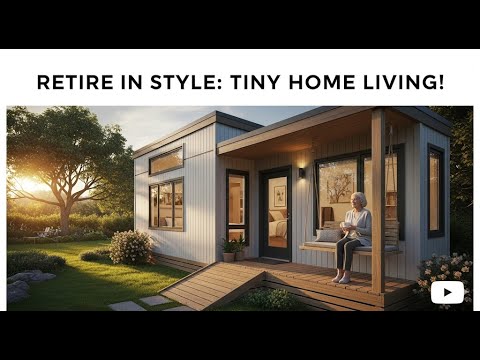
Portable elderly housing or "granny units" are an affordable alternative to nursing homes and can be used for rehabilitation or long-term care.
Some granny units are modular homes, and others are high tech senior housing units providing 24 hour monitoring next to a senior caregiver's home. The senior housing unit usually contains a sleeping, bathing, cooking, and living area with a small footprint - sometimes as small as 12x24. Units are often transported and installed in the back yard similar to a mobile home.
The most high-tech “Granny Cottage” that I've seen cost approximately $85,000 (well, it was before the pandemic!). It included:
- 288 square feet unit (12 ft x 24 ft)
- Wheelchair accessible
- 24 hour camera surveillance motion sensors
- Monitoring system for health conditions
- Fall prevention monitoring through feet sweep floor level cameras
- Electricity and water connected directly to homeowner's utilities
- A kitchen with a small refrigerator, microwave, and medication dispenser
- Bedroom and additional accommodation for a caregiver's visit
- Handicapped accessible bathroom
- Adjustable hospital bed
- Cushioned flooring
- Intercom system
- Lift and mobilization track systems
Smart technology features in this type of portable elder housing include the ability to:
- -Monitor vital signs, blood pressure, glucose, heart rate and blood gases
- -Entertainment including music, literature and movies
Family caregivers can monitor the status of a loved one such as vital signs and medications taken through a smart phone. These Granny Pods, or cottages are a great example of what I call "shared housing," but it's really something that needs to be planned for in advance and requires lots of architectural design and money -and that you live with someone that you are probably related to.
Co-Housing
There is another really good option to consider. Co-housing units are a great option for people who want smaller living units and cooperative living experiences. In the late 60s, we would have called them communes. Shared housing facilities tend to have a shared vegetable garden, a common house, play areas, and they are frequently multigenerational. They are car-free, usually pedestrian-friendly, and in many cases are brought to gather based on a philosophy of one kind or another. (Glass, 2013)
Another co-housing phenomenon that I see more frequently is the idea of a group of friends deciding to live together - independently. In some cases, they rent a house with many rooms, and each sub-let their space. In more committed relationships, these friends jump in and buy a property large enough for them to live collectively, with spaces of their own. They commit to each other to care as much as they can and share the costs of support when the need becomes necessary. (Hemmens et al., 1996)
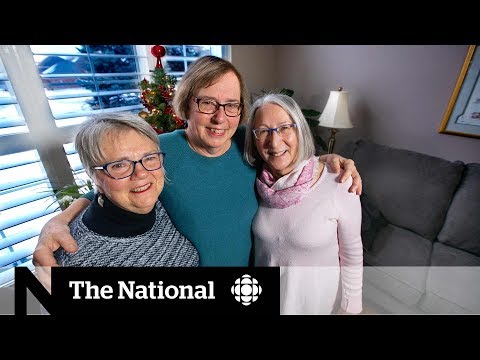
(Source: CBS News)
Adult Living
Sometimes we just want to live with like-minded individuals in an age-restricted environment. Adult communities, or adult cities allow us to do that. By designating the owners or renters must be over age 50, they are limiting the pool of the potential residents. Most people who live in an adult community are still working. They live in single-family homes, apartments, mobile homes and are often built as a preplanned community. Individual homes may be very architecturally similar to each other, but they're more affordable because they've been built en masse.
They are marketed to the active senior and frequently are constructed around golf courses and other sports and social activities. An adult community is different from a retirement community.
In a retirement community, it is expected that the residents will, indeed, be retired. They want more from their housing and expect social activities to be organized for them as a part of their membership in the community. Often times we see a residence hall, a gatehouse, a community center, a sporting activities center, and often some on-site to support services – someone who can help coordinate bringing care into the home if they need it. Similar to being in an adult community, the assumption is that you will be an active senior when you move in. You won't be necessarily asked to leave because you've experienced some health decline, but you will be expected to pay for it and arrange for those additional outside services in addition to what your regular rent or mortgage might be. (Lavizzo-Mourey & McGinnis, 2003)
Naturally Occurring Retirement Community (NORC)
A Naturally Occurring Retirement Community, or NORC, is completely unplanned and happens anyway. A NORC is a neighborhood that aged in place. They all decided at one point or another to stay for the long term and formed a resident community under the idea that since they were all aging in place, they would collaborate. For example, rather than hiring five individual gardeners on a cul-de-sac, one gardener would be hired to do all five lawns and charge each customer slightly less. Another neighbor might be a bookkeeper, and another might know how to sew or cook. As residents of this community, resources would be shared for as long as possible among the residents. Then, when additional help was needed, the NORC would contract to bring outsiders to do the services.
The first NORCs were first seen in New York City in the high rises. In some cases, entire floors of an apartment building have been changed into a hub of activity, with social workers, dietitians, and other providers can come and work with the residents. There are rooms that have been made into classrooms for education and exercise. Everyone contributes just a little bit toward the services, and it helps them stay in the home that they've been for years. We see more and more NORCs appear. If you look at the map, you can see where they are - primarily in Arizona, Central California, Texas, and Central Florida. (Hunt, 1986; Bedney et al., 2010)
Please watch the video:
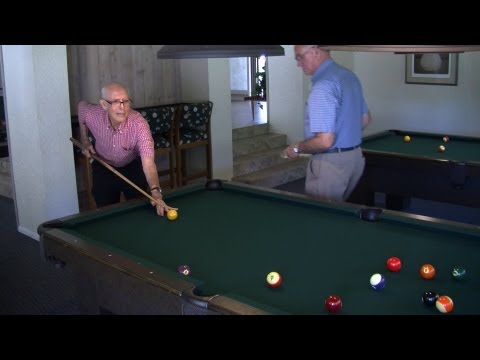
(Source: Kate Scholov)
What about low income options?
For older adults with limited incomes, there are some options. Section 202 housing is a federally subsidized housing program, where a landlord is required to offer rent at a lower rate, and they receive the balance of what their market-rate rent would be from a federal source. Unfortunately, the waiting list for these homes is very, very long. If you know someone who you think might need section 202 housing, it is prudent to get on the waiting list as soon as you think that they might qualify. They must be out or below the poverty level when they apply. (Carder et al., 2018)
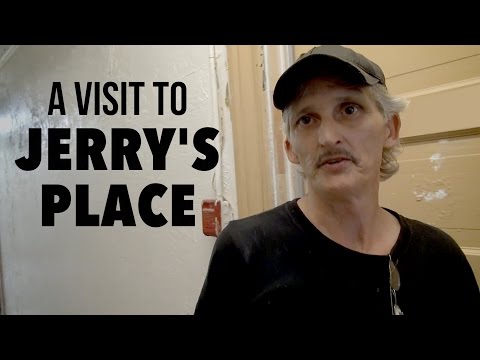
Single Room Occupancy Hotels (SRO) are very much like a regular hotel but rented by the week or by the month. Notoriously, single room occupancy hotels are found in the larger cities and are also notoriously questionable because of the low rent. One cannot assume that there will be housekeeping or regular maintenance. You'll have to see shared bathrooms for up to five residents. Rooms are not equipped with kitchens, so it is literally a single room.
We also see home sharing as an option. People of all ages live in roommate situations similar to what we envision young people doing. Maybe the older person rents out a room in their own home to offset the expense of the mortgage. Maybe it's two or three people finding a piece of property and buying it, or renting it, together. The idea of shared living in a single-family home is becoming more and more common.
Watch the first 2-3 minutes of the following video to get a sense of what life is like in a single room occupancy hotel.
And for the very prepared? There are non-traditional options!
Where are you live is really based on what you can afford and the limits of your imagination. For the genuinely well prepared, there are some genuinely surprising alternatives. From living on cruise ships to shifting our entire world to another country....with enough thought (and money), we can explore the world in a very different way.
Please watch the video:

(Source: CBS This Morning)